Korean BBQ Steak Rice Bowl Spicy Cream Sauce
Korean BBQ Steak Rice Bowls with Spicy Cream Sauce are about to become your new weeknight obsession. Who can resist the allure of perfectly grilled, marinated steak, served atop fluffy rice and drizzled with a lusciously creamy, yet excitingly spicy sauce? It’s a flavor explosion that hits all the right notes – savory, sweet, a touch of heat, and utterly satisfying. This dish has captured hearts (and stomachs!) for its incredible balance of textures and tastes, and our Korean BBQ Steak Rice Bowls with Spicy Cream Sauce take it to the next level. What truly sets this recipe apart is the magical synergy between the tender, flavorful steak and that irresistibly addictive spicy cream sauce. It’s a symphony of Korean-inspired flavors that’s surprisingly simple to recreate at home, promising a restaurant-quality meal without the fuss.
Ingredients:
Korean BBQ Steak Rice Bowls with Spicy Cream Sauce
Get ready to elevate your weeknight dinners with these incredibly flavorful Korean BBQ Steak Rice Bowls! This recipe is a perfect blend of savory, sweet, and a touch of heat, all brought together by a luscious, creamy sauce. We’re talking about tender, marinated steak piled high on fluffy rice, then drizzled with a dreamy, spicy cream sauce that will have you coming back for seconds, and maybe even thirds. It’s surprisingly simple to make, yet delivers restaurant-quality taste that’s sure to impress.
The magic starts with a quick marinade for the steak. We’re using a classic Korean-inspired combination of soy sauce for umami, gochujang for a deep, complex chili flavor, and honey for a touch of sweetness to balance it all out. Sesame oil adds that unmistakable nutty aroma, while garlic and onion powder provide foundational savory notes. Don’t worry if your steak isn’t perfectly uniform in size; the key is to get those flavorful edges well-coated for maximum taste in every bite. We’ll let that marinate while we whip up our star sauce.
Preparing the Steak Marinade
In a medium bowl, combine the 1 lb of beef steak cubes with 1 tbsp of soy sauce, 1 tbsp of gochujang, 1 tbsp of honey, 1 tsp of sesame oil, 1 tsp of garlic powder, ½ tsp of onion powder, ¼ tsp of salt, and ⅛ tsp of black pepper. Stir everything together thoroughly, ensuring each piece of steak is well-coated with the marinade. For the best flavor development, I recommend letting the steak marinate for at least 15-30 minutes at room temperature. If you have more time, you can cover the bowl and refrigerate it for up to 2 hours. This allows the flavors to really penetrate the meat, making it incredibly tender and delicious.
Crafting the Spicy Cream Sauce
While the steak is marinating, let’s get our creamy sauce ready. In a separate small bowl, whisk together ½ cup of mayonnaise, ¼ cup of sour cream, 1 tbsp of sriracha, ¼ tsp of salt, and ⅛ tsp of black pepper. The mayonnaise provides a rich, smooth base, while the sour cream adds a pleasant tangin extractess. Sriracha brings that essential spicy kick, which you can adjust to your personal heat preference. Remember, you can always add more sriracha if you’re feeling brave! Give it a good whisk until everything is completely combined and you have a smooth, emulsified sauce. This sauce is so versatile; it’s also fantastic on sandwiches, as a dip for fries, or even as a salad dressing.
Cooking the Steak to Perfection
Now, let’s cook that beautifully marinated steak! Heat a large skillet or cast-iron pan over medium-high heat. Add a tablespoon of neutral cooking oil (like vegetable or canola oil) to the hot pan. Once the oil is shimmering, carefully add the marinated steak cubes in a single layer. It’s important not to overcrowd the pan, as this will cause the steak to steam rather than sear, and we want those delicious crispy edges! If you have a lot of steak, cook it in batches. Let the steak cook for about 2-3 minutes per side, or until it’s nicely browned and cooked to your desired level of doneness. For medium-rare, aim for an internal temperature of around 130-135°F (54-57°C). Remove the cooked steak from the pan and set it aside on a plate. Don’t forget to let it rest for a few minutes before serving; this allows the juices to redistribute throughout the meat, ensuring maximum tenderness and flavor.
Assembling Your Flavorful Rice Bowls
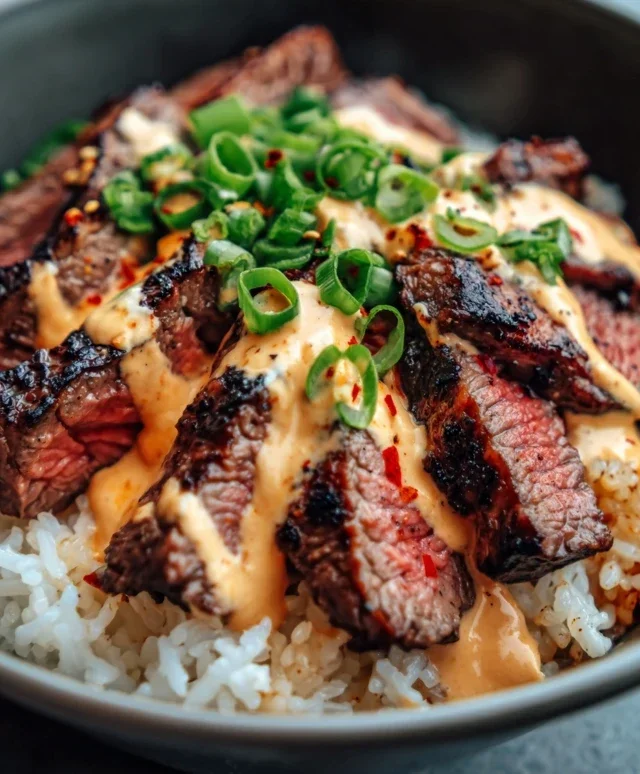
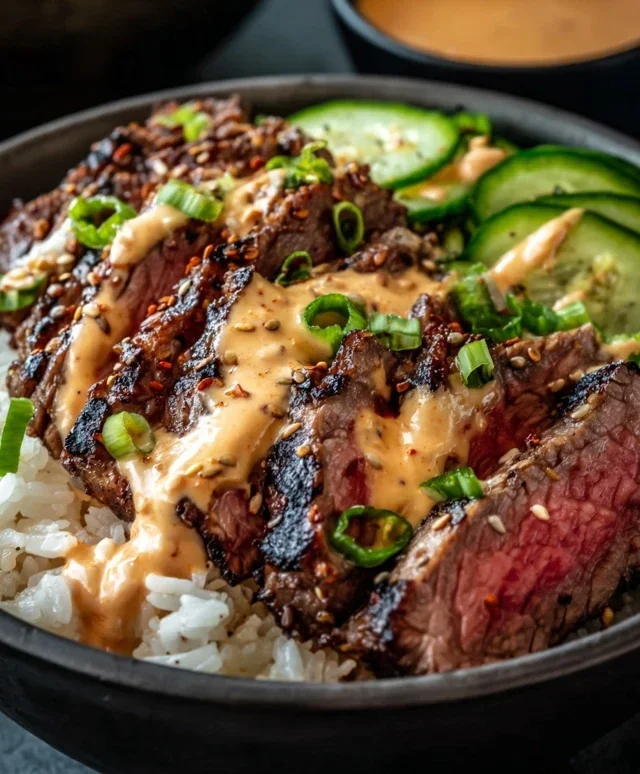
It’s time to assemble these glorious rice bowls! Divide the 1 cup of cooked rice evenly between two serving bowls. I love using jasmine rice for its fragrant aroma, but white or brown rice works just as wonderfully. Arrange the rested, cooked steak cubes over the bed of rice. Don’t be shy; pile it high! Next, generously drizzle that incredible spicy cream sauce over the steak and rice. You can use a spoon or a squeeze bottle for a more artistic drizzle. The creamy, tangy sauce will mingle with the savory steak and fluffy rice, creating a symphony of flavors in every bite. If you like, you can garnish with some thinly sliced green onions, toasted sesame seeds, or even a sprinkle of red pepper flakes for an extra pop of color and flavor. Serve immediately and enjoy the incredible taste sensation!
Conclusion:
I hope you’re as excited to try these Korean BBQ Steak Rice Bowls with Spicy Cream Sauce as I am to share them with you! This recipe is a true winner because it masterfully balances tender, flavorful marinated steak with a creamy, subtly spicy sauce, all served over fluffy rice. It’s a complete meal that feels both indulgent and satisfying, perfect for a weeknight treat or a weekend gathering. The vibrant colors and delicious aroma alone are enough to get your taste buds tingling. Don’t be intimidated by the marinated steak; it’s simpler than it looks and the payoff is immense. I highly encourage you to dive in and create this deliciousness in your own kitchen – you won’t regret it!
For serving, I love topping these bowls with a sprinkle of toasted sesame seeds, thinly sliced green onions, and perhaps a few quick-pickled radishes for an extra pop of flavor and texture. You could also add some steamed or stir-fried vegetables like broccoli or snap peas. If you’re feeling adventurous with variations, consider swapping the steak for thinly sliced beef belly or even firm tofu for a vegetarian option. You can also adjust the spice level of the cream sauce by adding more or less gochujang. The beauty of this Korean BBQ Steak Rice Bowl is its adaptability!
Frequently Asked Questions:
What kind of steak is best for this recipe?
For these Korean BBQ Steak Rice Bowls, I recommend using a tender cut of beef like flank steak, sirloin, or ribeye. These cuts are great for marinating and cook up beautifully, ensuring a delicious and tender result. Slice them thinly against the grain for optimal texture.
Can I make the spicy cream sauce ahead of time?
Yes, absolutely! The spicy cream sauce can be made a day or two in advance and stored in an airtight container in the refrigerator. You might need to stir it well or gently warm it up before serving, as it can thicken when chilled.
How spicy is the cream sauce?
The spice level of the cream sauce is adjustable. The gochujang is the primary source of heat, and its intensity can vary by brand. Start with the recommended amount and taste as you go. If you prefer it milder, use less gochujang or add a touch more cream or mayonnaise. For a spicier kick, feel free to add a pinch of red pepper flakes or a dash of your favorite hot sauce.
Korean BBQ Steak Rice Bowls with Spicy Cream Sauce
Tender marinated beef steak served over fluffy rice, topped with a creamy and spicy gochujang-based sauce. A quick and flavorful meal.
Ingredients
-
1 lb beef steak (flank, skirt, or New York strip), cut into 1-inch cubes
-
1 tbsp soy sauce
-
1 tbsp gochujang (Korean chili paste)
-
1 tbsp honey
-
1 tsp sesame oil
-
1 tsp garlic powder
-
½ tsp onion powder
-
¼ tsp salt
-
⅛ tsp black pepper
-
1 cup cooked rice (white, brown, or jasmine)
-
½ cup mayonnaise
-
¼ cup sour cream
-
1 tbsp sriracha
-
¼ tsp salt
-
⅛ tsp black pepper
Instructions
-
Step 1
In a bowl, combine soy sauce, gochujang, honey, sesame oil, garlic powder, onion powder, ¼ tsp salt, and ⅛ tsp black pepper. Add the beef cubes and toss to coat. Marinate for at least 15 minutes, or up to 4 hours in the refrigerator. -
Step 2
While the beef marinates, prepare the spicy cream sauce. In a separate bowl, whisk together mayonnaise, sour cream, sriracha, ¼ tsp salt, and ⅛ tsp black pepper until smooth. -
Step 3
Heat a skillet or grill pan over medium-high heat. Add the marinated beef in a single layer, ensuring not to overcrowd the pan. Cook for 3-5 minutes per side, or until the steak is browned and cooked to your desired doneness. -
Step 4
Divide the cooked rice between two serving bowls. -
Step 5
Top the rice with the cooked Korean BBQ steak. -
Step 6
Drizzle a generous amount of the spicy cream sauce over the steak and rice. Serve immediately.
Important Information
Nutrition Facts (Per Serving)
It is important to consider this information as approximate and not to use it as definitive health advice.
Allergy Information
Please check ingredients for potential allergens and consult a health professional if in doubt.